
 Starting Early is back from our summer break!
***
I didn’t grow up with much exposure to sports, so it still surprises me that I’m now a soccer mom who spends weekends crisscrossing New Jersey to watch my sons play. From the sidelines, I see kids of all backgrounds running, high-fiving, and building friendships that stretch far beyond the field.
A few years ago, I met Denny Boyle, fellow soccer parent and passionate champion of Soccer Without Borders. His love for sports and belief in its power to bring people together was contagious. Denny’s story — about how playing sports shaped his life and opened doors to connection, community, and leadership — reminded me that play is so much more than a game.
From the earliest years, play fuels language growth, helps regulate emotions, and promotes social connection long before children set foot in a classroom. As children grow, play continues to teach teamwork and problem-solving, build confidence, and support resilience. In short, play isn’t a luxury — it’s a foundation for lifelong well-being.
Too often, though, play is pushed aside. Recess is cut short, youth sports are priced out of reach, many playgrounds remain inaccessible, and screens compete for children’s attention.
As the world counts down to the 2026 World Cup — with the finals to be here in New Jersey! — we’re reminded of how powerfully play and sports can unite us. This issue explores why play matters for brain development, connection, and resilience — featuring insights from Isabelle Hau, author of Love to Learn, and a conversation with Jennifer Tepper, executive director of Soccer Without Borders.
When children play, communities thrive. That’s the kind of future worth building.
Atiya Weiss
Executive Director, the Burke Foundation
1 big thing: Play builds attachment 💕
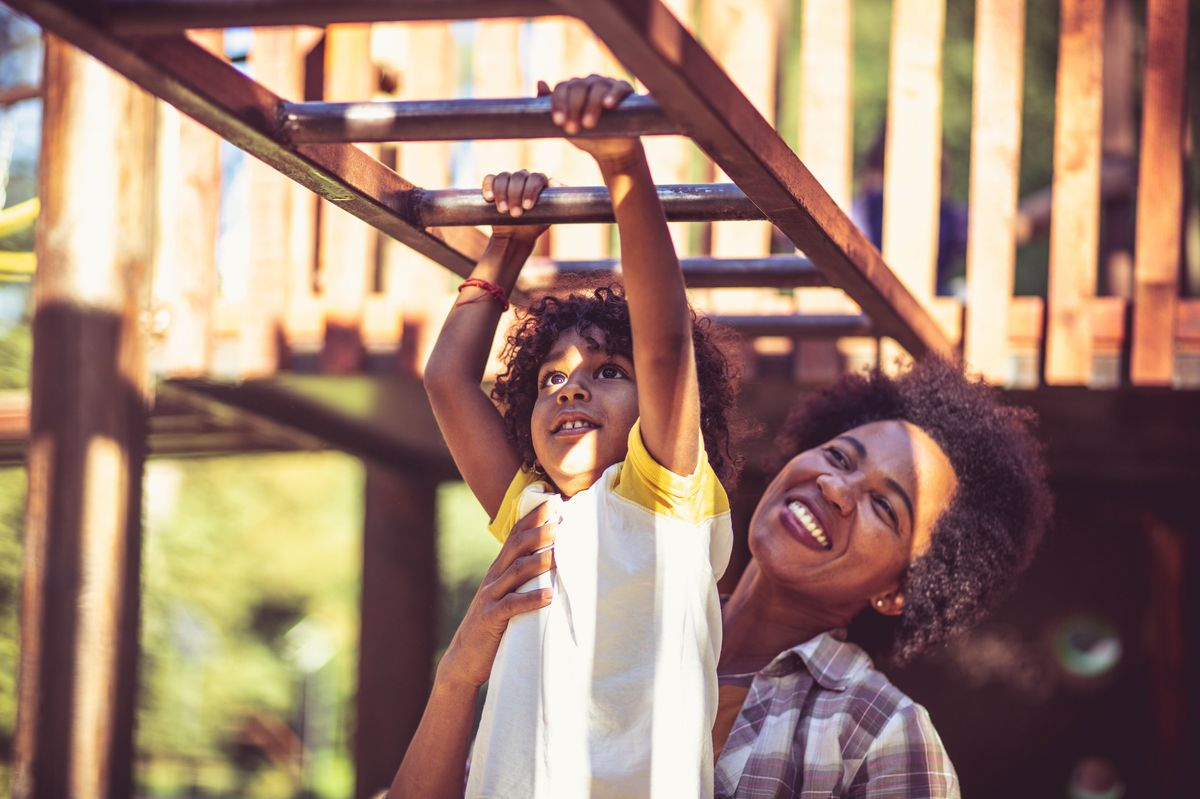
Play is one of the most powerful ways for kids to feel safe and connected.
Attachment theory tells us children are more likely to thrive when they know they’re supported by caring adults. Play is important in building bonds that promote lifelong health and well-being. A parent making silly faces with a toddler, a teacher joining a recess game, a coach offering a high five — they tell a child: You matter, I see you, you belong.
Why it matters:
Learning starts with love. Isabelle Hau writes in Love to Learn: “There is no learning without love” and she calls play the “natural engine for curiosity, creativity, human connection, and resilience.” Pretend play fuels imagination and abstract thinking; games with rules build logic and even help with early math.
Safe to try. Playful classrooms reduce stress and encourage kids to take risks, fail, and try again, the Overdeck Family Foundation notes. Think of a child tackling a tough puzzle or trying a new game. When play feels safe, kids are more willing to stretch themselves and recover from mistakes. Research shows children who engage in imaginative play with adults have 33% higher levels of secure attachment. And kids with strong attachment relationships have up to a 60% reduction in behavior challenges.
Play drives opportunity: Kids in classrooms where play is woven into the fabric of learning show stronger reading comprehension, problem-solving, and executive function.
Connection matters: Play gives children a chance to practice teamwork, empathy, and communication — crucial skills for success in school and in life. Isabelle Hau adds that pretend play is also how kids process big emotions and learn compassion, perspective-taking, and conflict resolution.
The bottom line: Kids who play are more likely to grow into healthy adults. They learn teamwork, empathy, and self-regulation. A schoolmate explaining the rules of a game, a parent joining a pretend play session, or a coach praising effort over outcome reinforces trust and belonging.
2. Not all kids get the chance to play
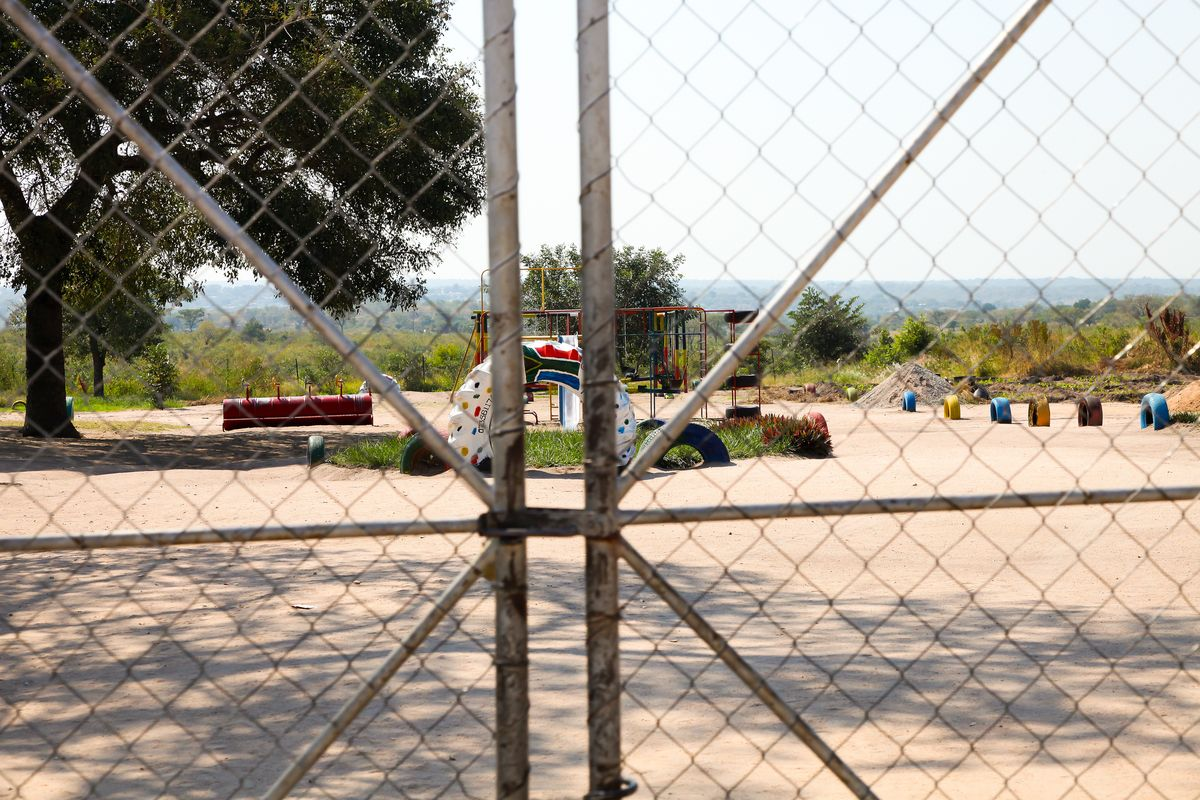
For too many kids, opportunities to play — at school and in their neighborhoods — are shrinking.
According to the Overdeck Family Foundation, play and learning go hand in hand, but opportunities for play in school can be hard to find:
13 minutes a day: In some schools, that’s all the recess kids get — not enough time to move, reset, or connect with friends.
1 in 3 children doesn’t live near a playground: And even when they do, it’s often outdated, unsafe, or unwelcoming.
Play disparities: Neighborhoods where families struggle to make ends meet and communities of color are far less likely to have high-quality places to play.
In New Jersey, for example, Montclair has nearly double the number of playgrounds per square mile than nearby Newark. It’s true everywhere: A child in New Canaan, CT, has far greater access to safe play spaces than in Bridgeport.
Breaking down barriers: KABOOM!’s Playspace Inequity Prioritization Index helps cities identify where kids have the least access, so investments can go where they’ll make the biggest difference.
Why it matters: Play isn’t a distraction from learning. It is learning. The return on schools and neighborhoods investing in play is healthier kids, stronger academics, and better-connected communities.
3. Play opens doors: A conversation with Jennifer Tepper ⚽🌍
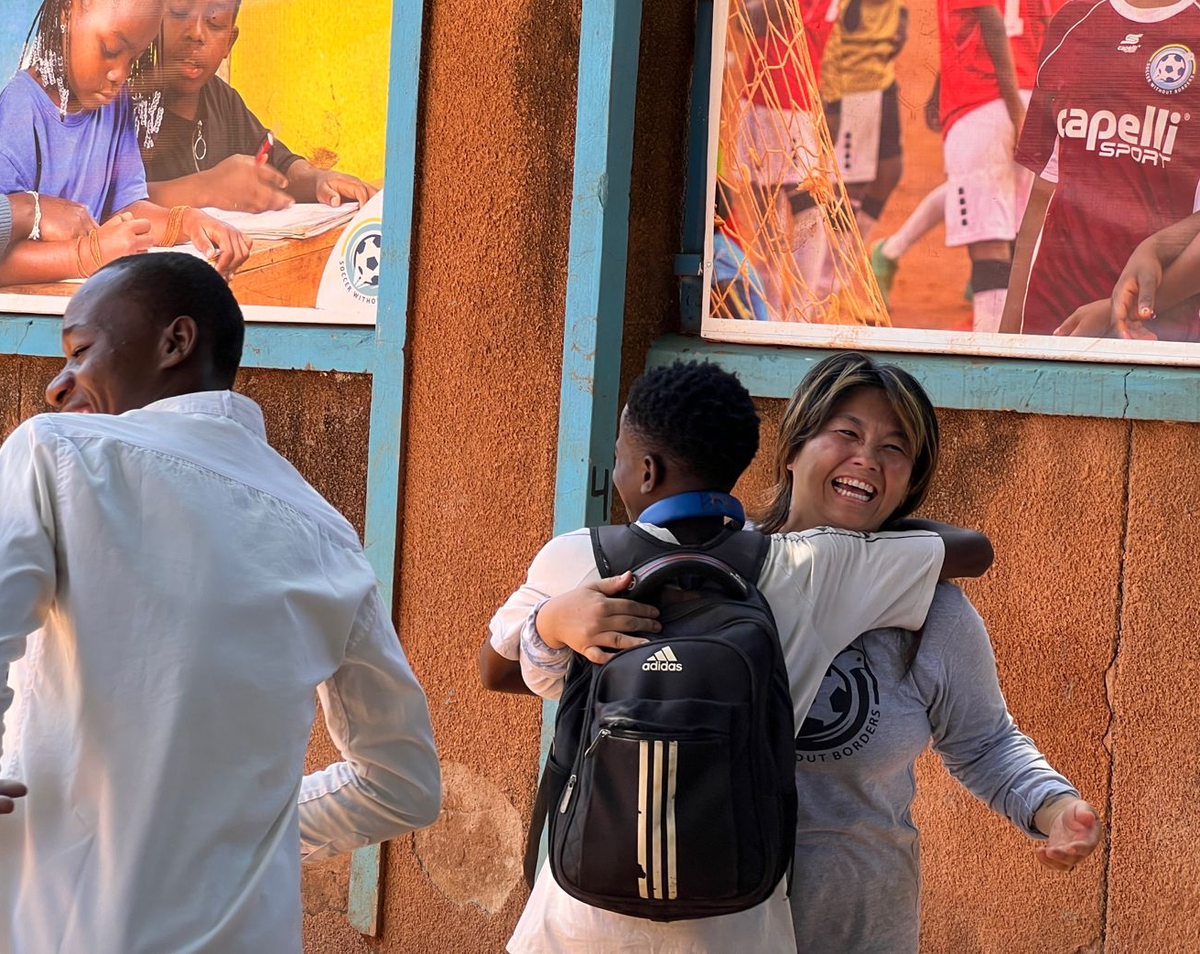
Jennifer Tepper is executive director of Soccer Without Borders, which serves nearly 8,000 young people in the U.S., Uganda, and Nicaragua. Using soccer as a platform for belonging and leadership, the organization creates opportunity for immigrant and refugee youth.
Jennifer’s connection to soccer is personal: Arriving in the U.S. from Taiwan unable to speak English, she discovered the game in middle school. She found in it a community, supportive coaches, and the means to build confidence and leadership. Leading Soccer Without Borders, she says, feels like the job description was written for her — combining a professional career dedicated to social justice with her own experience of how play can open doors.
How do play and sports work together to change children’s lives?
Our focus is on the social-emotional learning that comes through soccer — team building, mentorship, and the relationships with peers and coaches. At its core, soccer is play.
In our youth surveys over 20 years, the most common word kids use is “fun.” That’s what play should be. Unfortunately, youth sports in this country have become more competitive. Most kids are dropping out at ages 11 to 13 because it’s too pressured. There’s a movement now to “take back play” — ESPN and Aspen Institute’s Project Play are part of it — because kids need sports to be joyful again. Fun creates the safe space for building confidence, trying leadership, and coming back every day because it’s something they love.
What opportunities does Soccer Without Borders create for young people?
We work mostly with middle and high school students, but we also run elementary school camps. Many participants grow into youth leaders, coaches, or even our staff.
In Baltimore, through the Youth Works initiative, high school students are paid to be camp counselors. About 30% of our 109 staff are alumni of our programs. That’s powerful because they bring lived experience, and they know what it feels like to be new or to search for belonging.
We also educate coaches. Our coaches are trained in inclusive methods, focused less on producing elite athletes and more on creating safe, empowering environments. We train coaches in the U.S., Africa, and Europe, and they’re among the best in building inclusive spaces.
What’s a story that illustrates the impact of your programs?
One example is from Aurora, Colorado. A Haitian student in our program learned he had to leave the U.S. in days because of immigration policy changes. It was devastating. But he came to practice anyway. “This is helping me cope,” he said. “I want to play. I want to smile.” That moment showed how play can be a mental health lifeline.
Another example is from Uganda. Five years ago, girls there didn’t play soccer at all. We started the Kampala Girls League. Now nearly 1,000 girls aged 5 to 19 play in 3 tournaments a year. Some women are now coaching and even leading national teams. What began as a safe space for girls has grown into breaking barriers and building pathways for leadership.
If you had to describe Soccer Without Borders in three words, what would they be?
Belonging. Agency. Access.
Belonging means creating a space where every young person feels they’re part of something bigger than themselves. Agency is about youth having a voice and ownership in the program. Access speaks to opportunity — whether it’s playing on a team for the first time, learning English, or discovering a pathway to leadership or a career.
Those 3 words guide everything we do.
What’s one of your favorite recent moments?
At our summer camps in Baltimore and the Bay Area, we had nearly 200 elementary school kids coached by older youth mentors. The joy was everywhere. You could see it in their faces. Those smiles can’t be faked. They remind us of one of our mantras: You play best when you’re smiling.
1 smile to go: Building leaders at recess
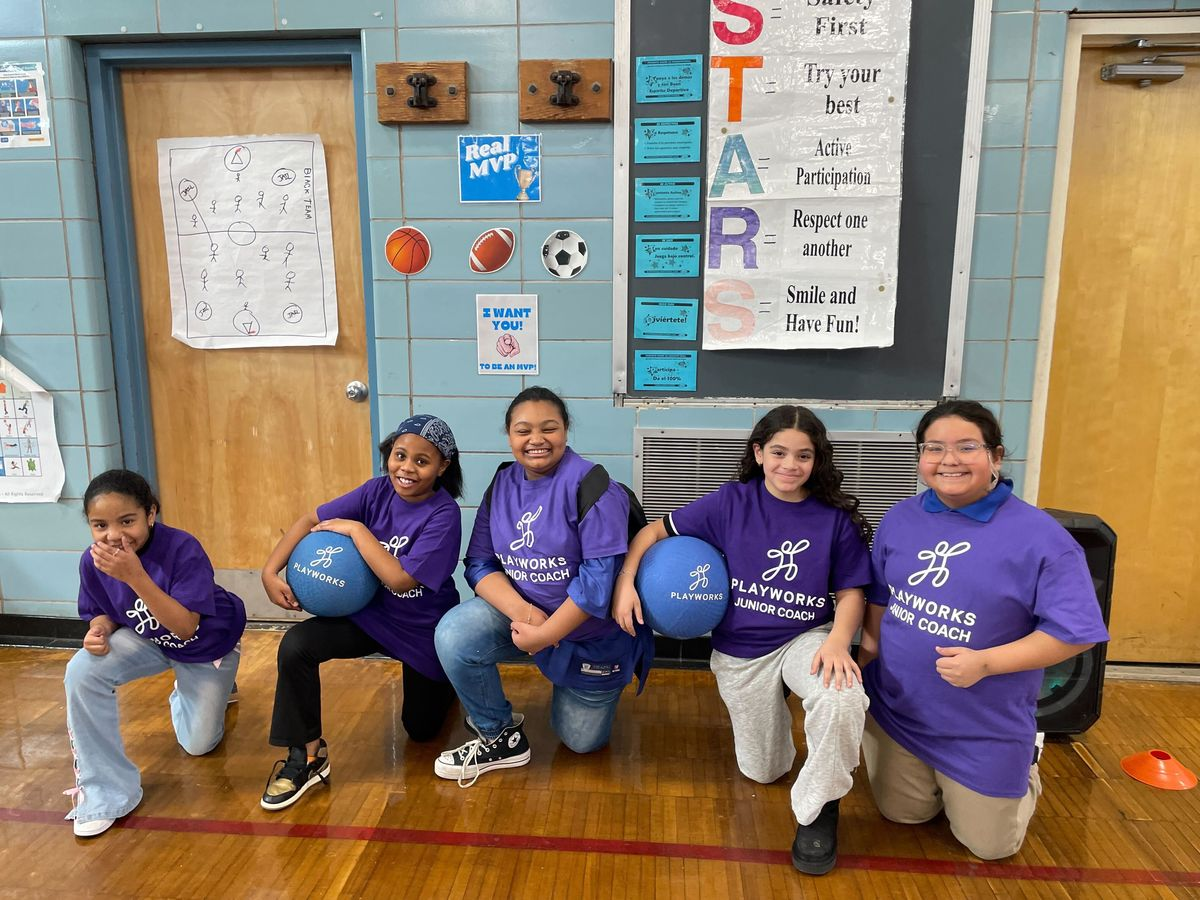
Across Newark schools and around the nation, Playworks is turning recess into more than a break: Coaches bring structure and inclusion to the playground, lead games that every child can join, and train older students as Junior Coaches who model fair play and resolve conflicts.
Playworks’ impact is striking:
In 3,000 U.S. schools, Playworks has reached more than 2 million students.
Students are more active, bullying decreases, and kids return to class ready to learn.
Teachers report calmer classrooms, and children say they feel safer and more connected at school.
Meet a Junior Coach: Angel used to sit out recess, hesitant to join her classmates. With encouragement from Playworks staff and peers, she stepped out of her shell and now mentors younger students, inviting them into games. The transformation carried into the classroom, where her newfound confidence and engagement stood out. 🌟
Robin Grossman, executive director of Playworks NY/NJ summed it up: “Play has always helped children practice the life skills they need to thrive. The social-emotional skills they’re learning while they’re playing — positive engagement, self-regulation, respect, team building, conflict resolution — they take back into the classroom and into their lives.”
Creating play spaces: Playworks shares tips for parents and educators to spark play, even when space or conditions are limited — making play a foundation for learning, connection, and thriving both in and out of school.