
1. Building brains through relationship-rich care 💕
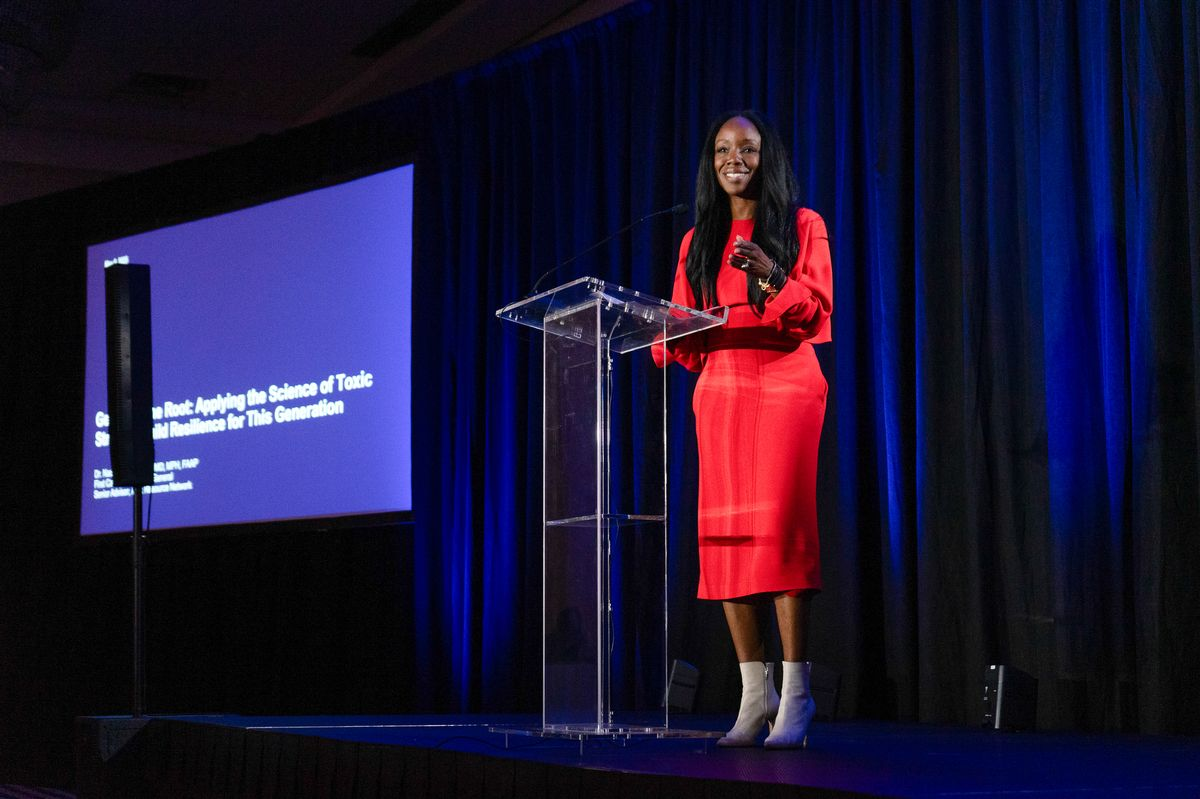
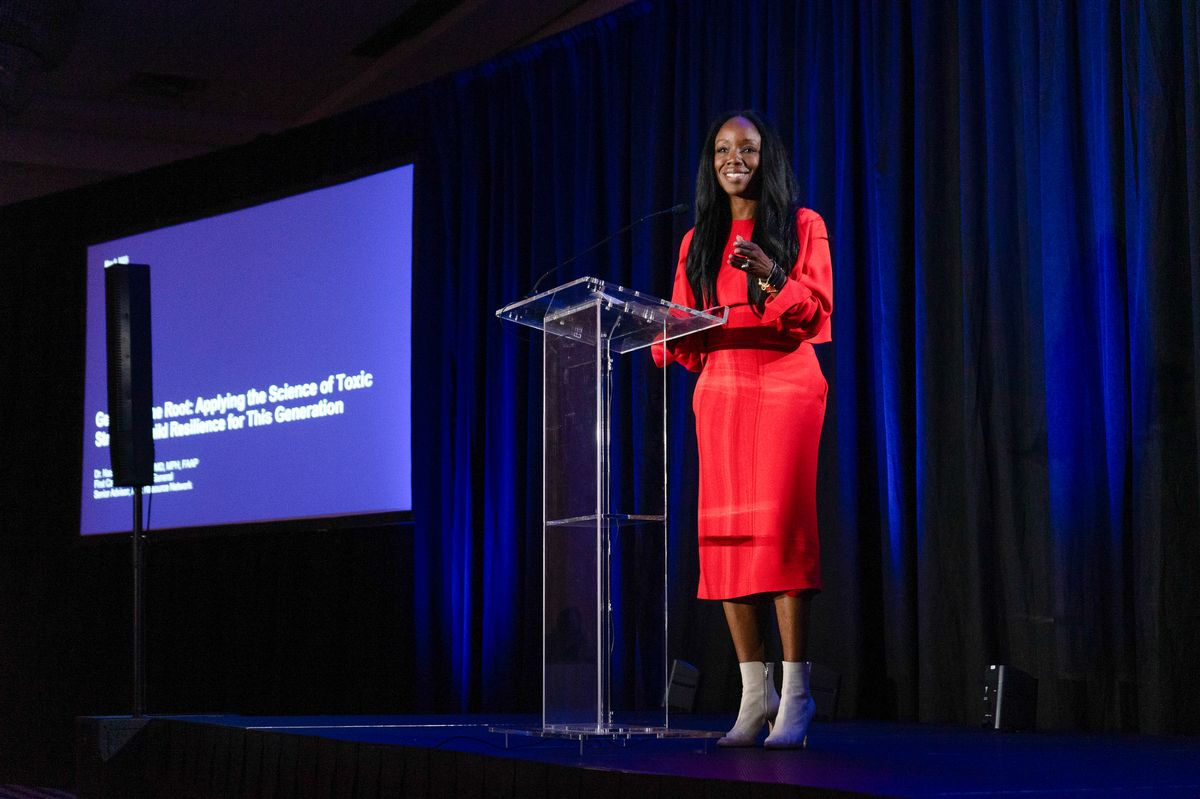
The 1,000 days from pregnancy to age 2 are the most sensitive and powerful time of a child’s development. Brain architecture forms, stress systems calibrate, and the foundations for learning and health are laid. At the Summit, Dr. Nadine Burke Harris and Dr. Dan Wuori called out the expensive — and dangerous — gap between what we know about early childhood and what we do in policy and practice.
“We’ve created a bizarro world for children,” Dr. Wuori said, describing deep flaws in the prevailing models of child care and other supports for families.
The result: Families are left to navigate systems that ignore science — and children pay a lifelong price.
The science: Unbuffered early adversity repeatedly triggers the body’s stress response — rewiring brain structure and disrupting immune and hormonal systems. This increases the lifetime risk of more than 40 physical and mental health conditions. But early, targeted support, can interrupt the cycle.
“Safe, stable, nurturing relationships and environments are healing,” said Dr. Burke Harris. “And with early detection and intervention, we can change the trajectory of a child’s life.”
The disconnect: “We want children to come to kindergarten ready to learn,” Dr. Wuori said, “as if that’s where learning begins.” In reality, he noted, a baby’s brain contains over 100 billion neurons — more than there are stars in the sky — and begins wiring itself through consistent, responsive relationships well before a child passes through the schoolroom door.
“The way we’ve conceptualized child care as a service to working parents — as opposed to a learning laboratory — doesn’t make sense,” Dr. Wuori emphasized.
And society doesn’t recognize the importance of child development. Consider this: Despite their foundational role, early educators earn just $13.22/hour on average — less than dog walkers. Yet, in most states, infant child care from professionals costs more than housing or in-state in-state tuition because quality care requires low caregiver-child ratios, strict standards, and high fixed costs. Providers can’t raise wages without raising prices, or cut corners without risking children’s well-being. It’s a broken system where families pay too much, educators earn too little, and the vital early years continue to be undervalued.
What works: Both speakers emphasized the power of relationship-centered care, whether in a responsive child care setting, home visiting, or child-parent mental health — all of which strengthen attachment and support learning.
Dr. Burke Harris talked about training 50,000 California healthcare providers to help address adverse childhood experiences and use Medicaid to connect families to lifesaving services, driving cost savings.
The bottom line: Brains are built through love, connection, and consistency. Investing in early, relationship-rich care is good public policy because it builds a healthier future from the very start.
2. New takes on fatherhood
Fatherhood is shaped by gender norms and systems that often sideline dads. And society has been slow to appreciate that dads are more engaged than ever.
The science of fatherhood: Dads experience hormonal changes during a partner’s pregnancy and after birth. Drops in testosterone and rises in oxytocin and dopamine prime men for caregiving.
But we spend far too few resources exploring fathers’ roles. “If you’re just focusing on a mom and a baby, you’re missing a key partner, says Dr. Craig Garfield. “We have no line of sight into how dads are doing. And if we can improve that, we can actually make better outcomes for children, mothers, and families.” That’s why he launched PRAMS for Dads in Georgia. The first public health surveillance program for fathers in the U.S., it explores the health of dads as they transition to fatherhood, including risk factors and protective behaviors.
PRAMS findings include:
High engagement: Most dads attended prenatal visits and were present at birth — showing strong involvement from day 1.
Mental health struggles: 1 in 10 fathers reported symptoms of depression during the period around birth.
Leave matters: Dads who took at least 2 weeks of paid family leave were 31% more likely to have babies still breastfeeding at 8 weeks.
Changing the narrative about Black dads: The CDC found that Black fathers who live with their children are more likely than white or Hispanic fathers to bathe, change, or dress their children every day, to eat daily meals with them, and to help with homework every day.
Yet Black dads face harmful stereotypes around fatherhood in addition to such other challenges as systemic racism, discrimination, and overrepresentation in prisons that threaten their health and well-being.
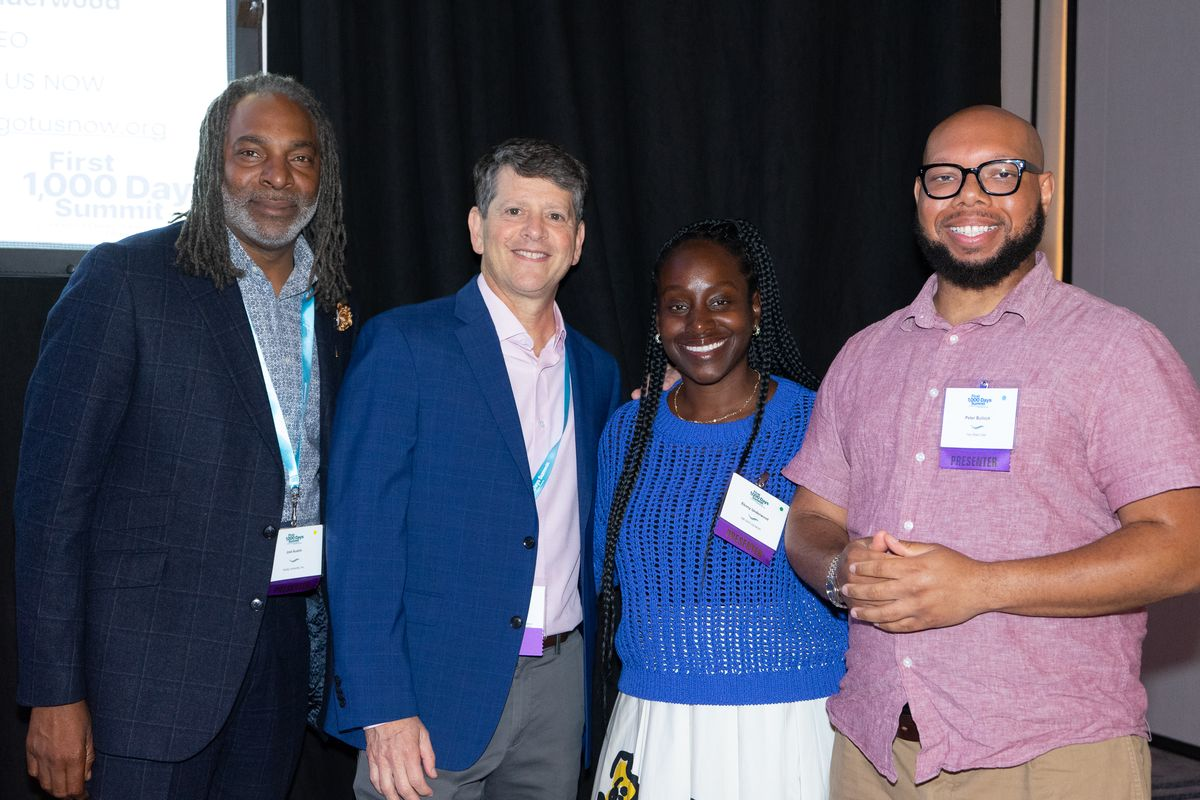
“Mass incarceration is a tsunami that has ripped apart families,” said Ebony Underwood, founder of We Got Us Now told the Summit audience. “The uphill battle for reunification, family integrity, and social mobility remains for millions of children.”
Ebony shared the story of growing up with her father Bill, who was sentenced to life without parole for a nonviolent drug offense when she was a teenager. Despite his physical absence, Bill was ever-present in his children’s lives, writing letters, calling frequently, and celebrating milestones however he could. Their relationship drove Ebony’s advocacy for children of incarcerated parents — helping to spark a national movement for change.
Her father’s case also helped inspire U.S. Senator Cory Booker’s Second Look Act, legislation allowing people who’ve served 10 or more years to petition for reduced sentences. Senator Booker met Bill Underwood in prison and calls his story emblematic of America’s need for second chances. After nearly 33 years behind bars, Bill was granted compassionate release in 2021 — a hard-won moment made possible by persistent advocacy that shifted policy.
Supporting dads from day 1: Peter Bullock, founder of Hey Black Dad in Trenton, NJ, is building a community for expectant fathers — providing tools, resources, and guidance so men can approach fatherhood with confidence and purpose.
“A dad could benefit from having a doula provide the tools to really support their birthing partner,” Peter said. “Being present is the best present. And presence starts before the baby is born.”
Bullock trains doulas to equip dads with tools and self-assurance to show up fully in the birthing room and beyond.
The bottom line: Fathers shape the early environment just as deeply as mothers do. Seeing them as essential, not optional — is critical to building stronger families and better-connected communities.
3. 🧠 The science of trust
Why it matters: Relationships are the most important input during the first 1,000 days. Every interaction helps shape brain development and promote long-term health. But in many care settings, pregnant women and families are rushed through appointments, questions go unanswered, and real connection is rare.
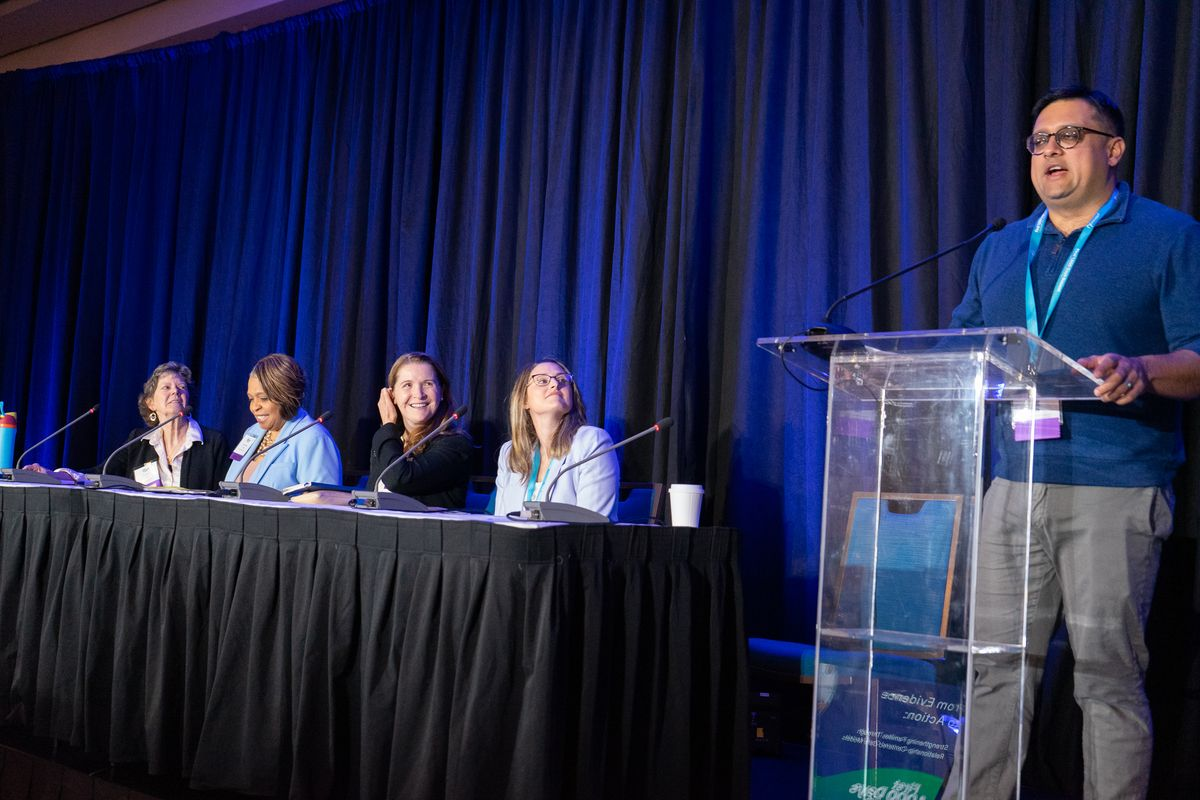
“Change happens based on trust,” said session moderator Jay Chaudhary, senior fellow for mental health and community wellness at Sagamore Institute. “Trust is based on relationships. And relationships don’t scale. But principles do.”
The big picture: At the First 1,000 Days Summit, experts in 4 evidence-based models — Centering, HealthySteps, Attachment and Biobehavioral Catch-Up, and Family Connects — shared ways to redesign care around time, trust, and relationships. 🧡
Each model delivers measurably positive results — from improved birth outcomes and maternal mental health to stronger parent-child bonds and fewer emergency room visits.
Jay shared these principles that policymakers, providers, and other leaders in the field should center:
Universal access instead of complex eligibility rules
Frictionless design that minimizes burdens on families
Family voice where models are shaped with, not just for, parents
Evidence-based goals with a clear path to impact
Zoom in:
CenteringPregnancy and CenteringParenting replace traditional prenatal and pediatric visits with group care rooted in community.
Family Connects NJ offers free postpartum nurse home visits to all families, with 4,000+ reached so far.
HealthySteps integrates a child development specialist into pediatric care — and is gaining early traction in New Jersey, with Medicaid eligibility set to fuel expansion starting July 1.
Attachment and Biobehavioral Catch-Up shows long-term gains in bonding, stress regulation, and vocabulary from just 10 coaching sessions.
What’s next: Building a system where every parent feels seen, supported, and empowered — because results follow relationships.
“Every parent wants the best for their child,” said panelist Emily Haines, chief nursing officer at the Partnership for Maternal and Child Health of Northern NJ. “The system’s job is to make that possible.”
1 smile to go: The Lullaby Project
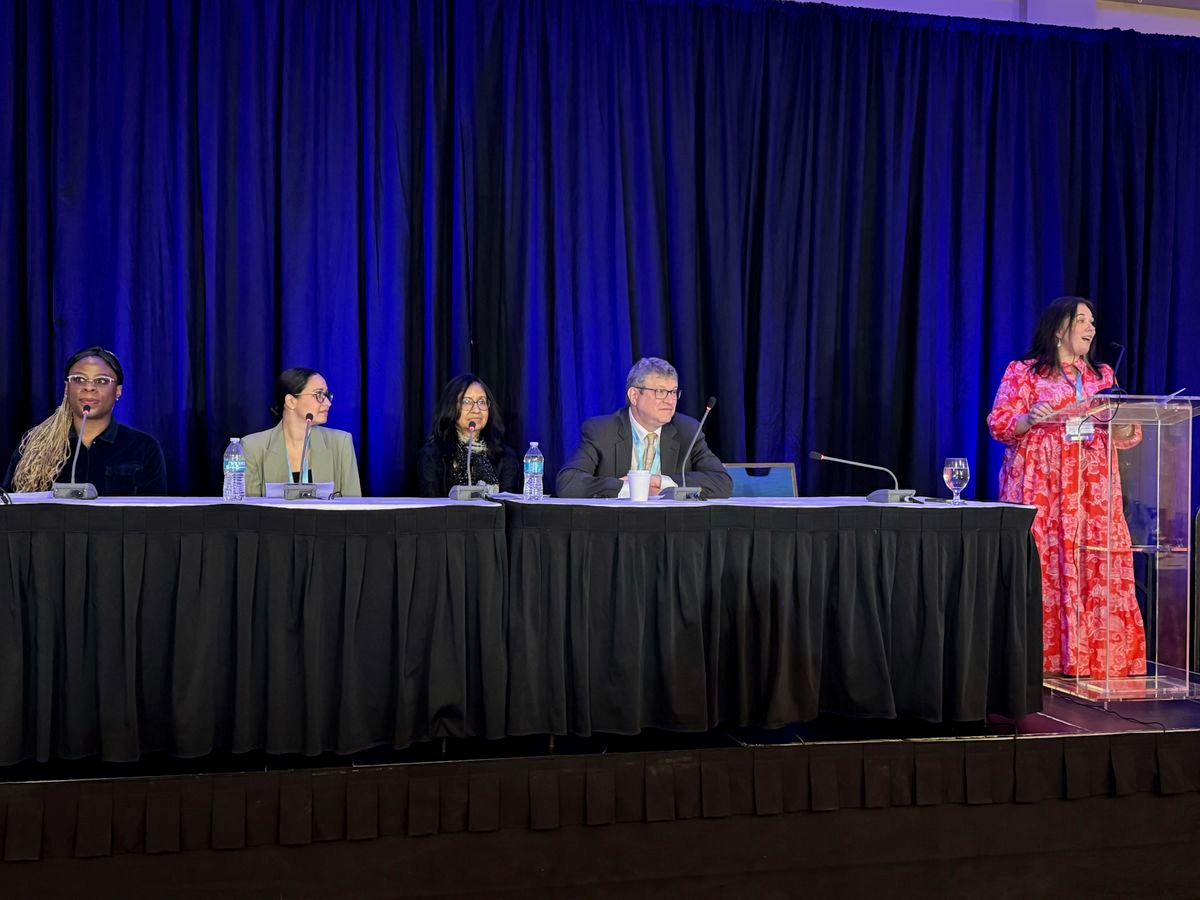
🎵 The science behind lullabies: When you instinctively sing a lullaby or silly song to calm a fussy baby you tap into something innate, universal, and backed by science. As Dr. Usha Ramachandran put it at the Summit, “Every culture has baby songs — nursery rhymes and lullabies — because families have known for generations what science is just showing now.”
💡 How it works: Developed by the Weill Music Institute at Carnegie Hall, the Lullaby Project pairs young families with musicians to co-create personal lullabies, harnessing the magic of music.
📚 Research shows:
Music boosts babies’ brain and language development, with powerful soothing effects that ease pain and aid healing for infants in neonatal intensive care units.
Creating music for their children builds adults’ confidence, buffers against stress, and offers joy and a sense of control during uncertain times.
Shared music supports development of strong bonds and loving relationships that improve well-being for babies and caregivers.
🌍 Where it’s happening: Arts institutions across the U.S. and around the world implement the Lullaby Project — often in partnership with homeless shelters, correctional facilities, hospitals, and other community organizations — to reach families experiencing hardships. ACENDA Integrated Health partnered with Rowan University students in South Jersey to bring the project to new parents, using music therapy to nurture early bonds, reduce stress, and celebrate each family’s story through song.
🎧 Grab a tissue and listen to some of the lullabies created through the project from this year’s Carnegie Hall Lullaby Project Concert.
🎼 The Lullaby Project reminds us that even the simplest songs can carry profound healing, joy, and love.