
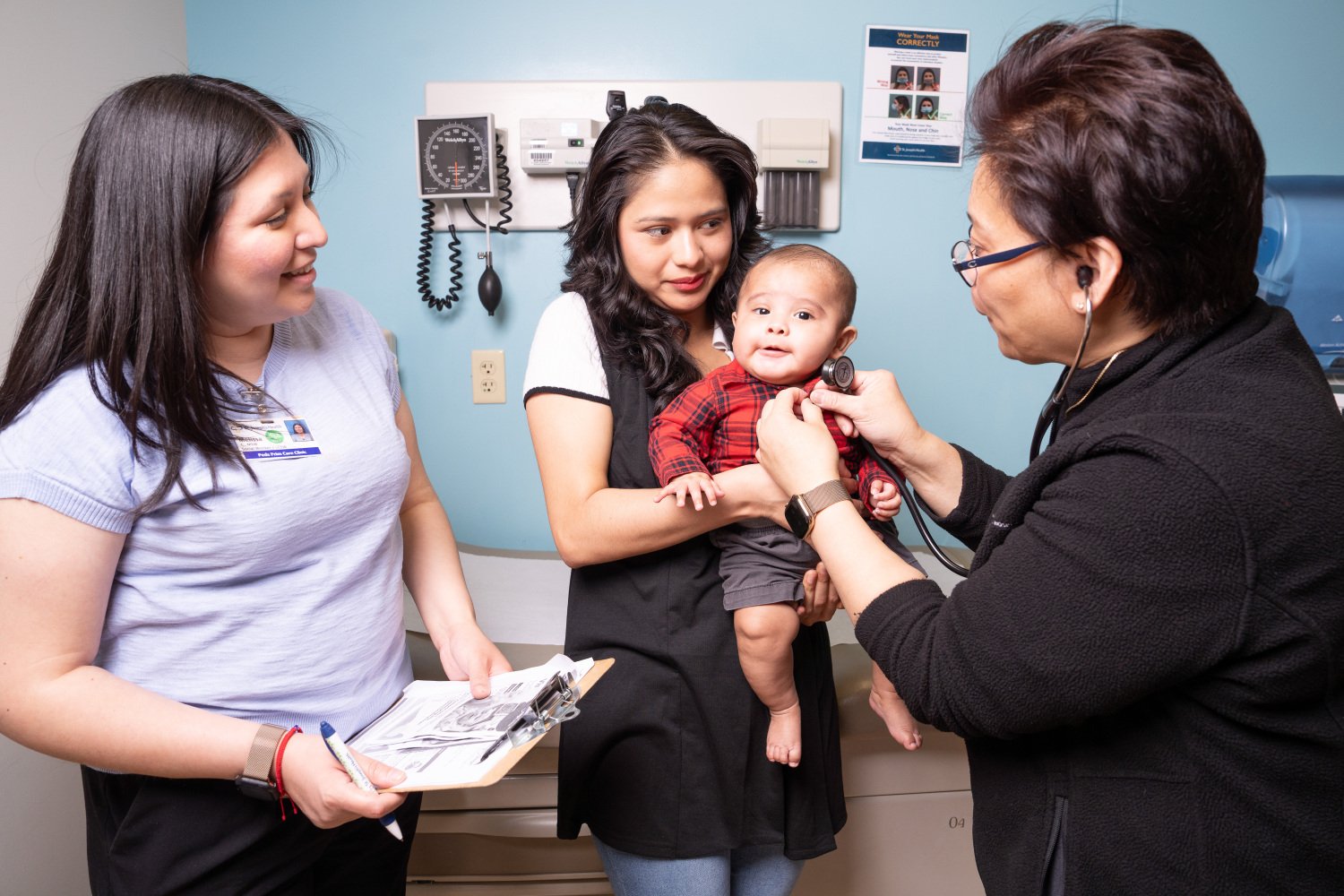
 As the mom of 2 boys, I vividly remember those early pediatric visits — full of questions and worries amid moments of wonder. Is my baby growing as expected? Sleeping enough? Should I be doing more to support his development?
Those visits are for most families the first and most consistent touchpoint with the healthcare system after a child is born. Too often, though, we seemed rushed and I didn’t get to bring up everything on my mind. The physical exam, which of course is important, was about all we’d accomplish in a 15-minute visit.
That’s what makes HealthySteps unique. Pairing medical care with practical, compassionate guidance from a child development specialist, this innovative approach turns routine pediatric checkups into opportunities for prevention, connection, and lifelong impact for parents and children. It meets them where they already are — in the pediatrician’s office — and builds trusting relationships that help families thrive.
In this issue, Dr. Rahil Briggs, national director of HealthySteps, shares how this relationship-centered model is transforming pediatric care nationwide — one practice at a time — while strengthening families and reducing costs.
Today, HealthySteps supports more than 10,000 children annually across New Jersey — and we’re working toward a bold goal: reaching 65,000 children, or 20% of those under age 3, by 2029. With support from the Burke Foundation and partners statewide, we’re inviting more pediatric practices to join this growing effort to make family-centered care the new standard in every exam room.
Because when we invest early in families, we strengthen the foundation for everything that follows.
Atiya Weiss
Executive Director, the Burke Foundation
1 big thing: The power of a simple idea🩺 💗
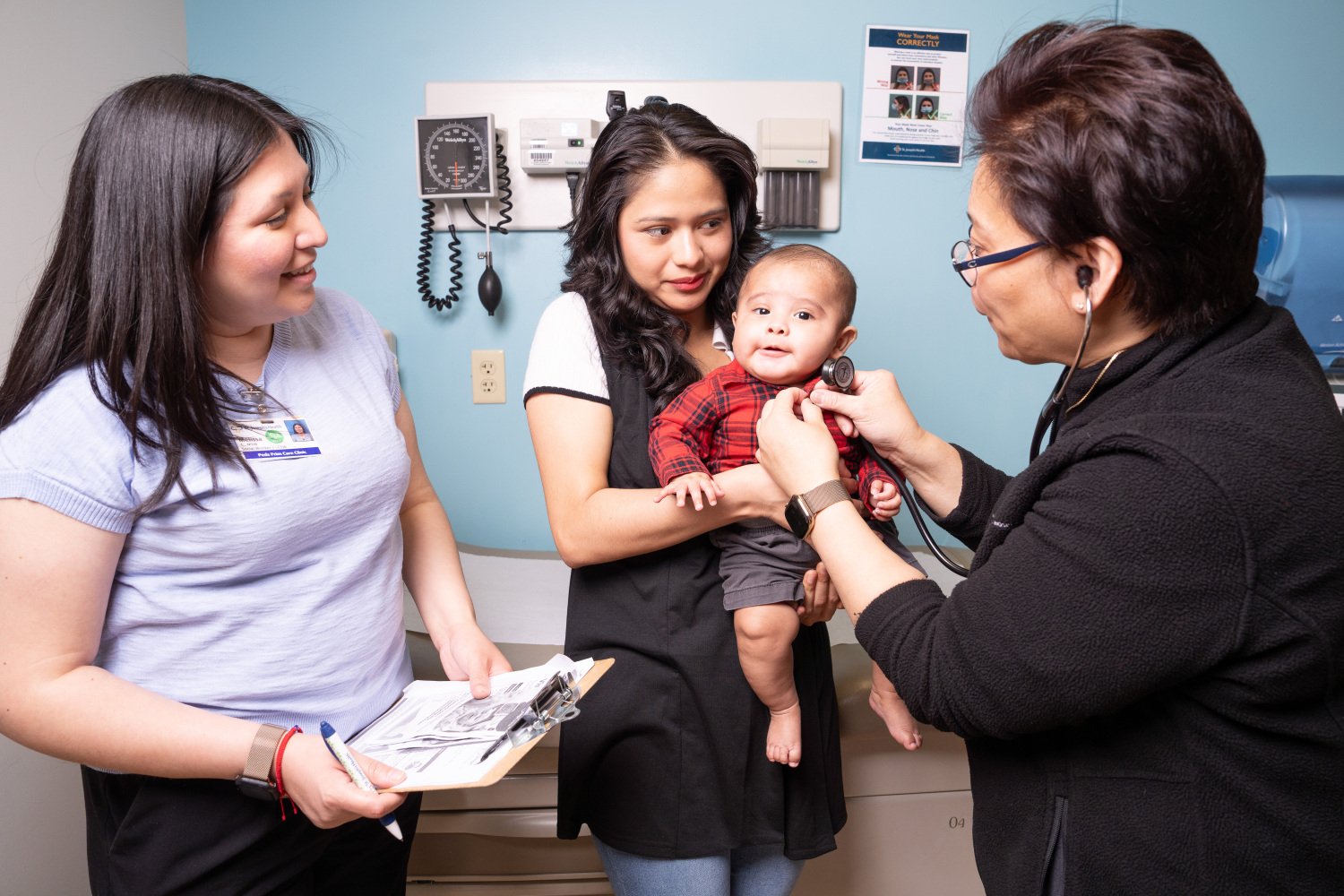
The idea: Nearly every baby sees a pediatrician. So why not make those visits a gateway to whole-family support?
That’s the genius behind HealthySteps, which embeds a child-development specialist inside pediatric practices. These specialists help families with young children through age 3 navigate feeding, sleep, behavior, and mental health — and connect them to early intervention and such community resources as food, housing, and transportation when needed.
It’s part of a nationwide shift toward promoting early relational health — nurturing safe, stable, and supportive relationships that shape lifelong well-being.
Why it matters: HealthySteps specialists fill gaps in pediatric care that physicians often don’t have time to cover — parental depression, bonding, early language, and stress management, for example. The team-based model supports 2 generations together: parents and children.
In partnership with the Turrell Fund and the Nicholson Foundation, the Burke Foundation funded New Jersey’s first HealthySteps specialists in 2021 at Hackensack Meridian Health. In the first 3 years, the system’s 3 sites:
Served 3,788 young children and caregivers
Made more than 7,000 referrals to community resources
Connected 30% of families to at least one referral — most often for food (19%), housing (12%), or utility assistance (12%)
Increased toddler vaccination rates by nearly 34%
Boosted completion of 6 well-child visits by 15 months by 54%
💲 Return on investment: It’s not just families that benefit. For every dollar spent through NJ Medicaid, healthcare costs decreased by about $8.35 through better health and fewer emergency visits.
💡 Good Medicaid news: Since July 2025, increased New Jersey Medicaid reimbursements for HealthySteps have made the model more sustainable — helping philanthropic dollars go farther and supporting long-term systems change.
📈 What’s next: Today, 8 sites statewide serve more than 10,000 NJ children up to age 3 each year, with the goal of surpassing 65,000 by 2029.
HealthySteps proves that prevention pays — for families, medical providers, and the healthcare system alike.
2. Presence and prevention: A conversation with Dr. Rahil Briggs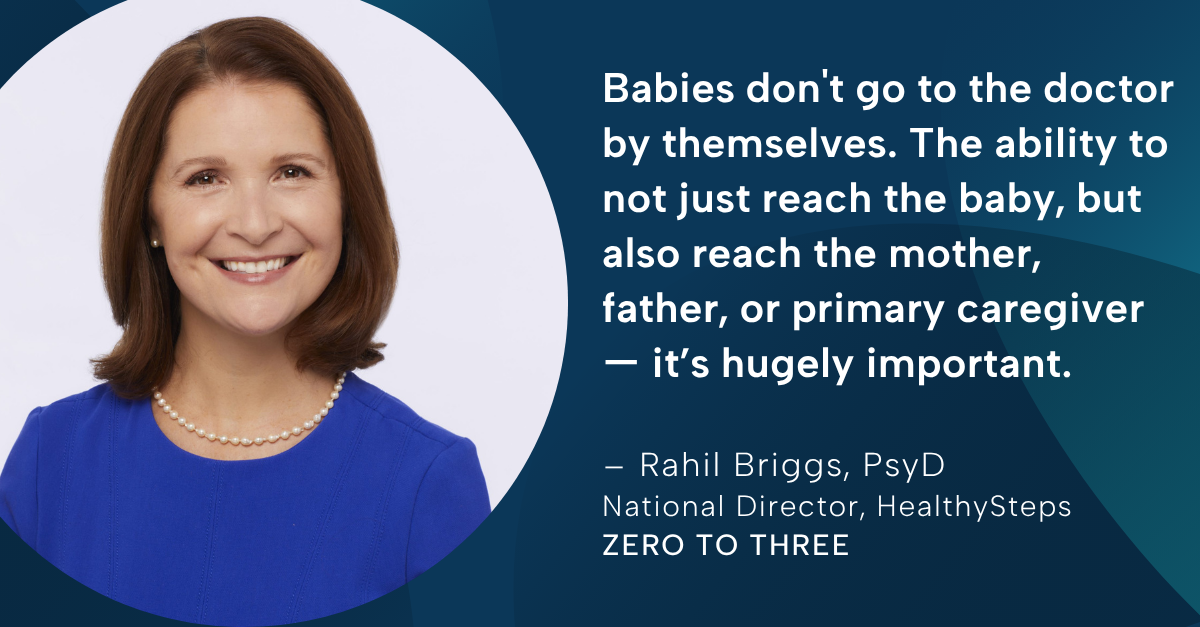
Dr. Rahil D. Briggs, national director of HealthySteps, leads one of the nation’s fastest-growing, evidence-based approaches to early childhood health. A clinical psychologist and professor at the Albert Einstein College of Medicine, her career bridges pediatric care and child development.
In this conversation, Dr. Briggs shares how HealthySteps helps families be seen more fully, what’s next for New Jersey’s scale-up, and why the earliest relationships are the strongest medicine of all.
At its core, HealthySteps is about relationships. How does bringing a specialist focused on child development and behavioral health into the pediatric team change what care looks and feels like for families and providers?
You can’t get much done without relationships, right?
Pediatricians have 15 minutes for a well-child visit, during which they’re asked to do everything under the sun, and more. They’re focused primarily on the physical health aspects and the anticipatory guidance that’s recommended. To really get down to the early relational health between the baby and the family sometimes takes a little longer.
If it was easy and there was an instruction manual, that would be a different case. But families are unique, living in unique circumstances. We need to spend the time to actually develop the trusting relationships, hear what families are struggling with and want to focus on, and partner with them in a way that feels authentic and meaningful.
What we hear most often from pediatricians is how grateful they are that there’s another team member to care for this family. Providing a full care team and practicing team-based care means that critical vital sign — the relationship — can be attended to.
Being a parent of a young child is often extremely isolating. And one of the most common things we hear from families who have benefitted from this program is some version of, “With HealthySteps, I’m not alone.”
HealthySteps is often called a “no-brainer” because it reaches families earlier and fills a gap in pediatric care. Why is prevention through pediatrics such a smart investment — for families, providers, and the healthcare system?
Prevention is a good idea always. To paraphrase Frederick Douglass, it’s easier to build strong humans than to fix them later on.
Upwards of 90% of families go to the pediatrician’s office. It’s a relatively non-stigmatized, and even positively stigmatized, space, and there are repeated visits — 12 to 13 in the first 3 years of life alone.
And babies don’t go to the doctor by themselves. The ability to not just reach the baby, but also reach the mother, father, or primary caregiver — it’s hugely important.
That’s a key piece of the smart investment. It’s better for children, but it also saves us money. New parents are the ones least likely to get preventive care themselves, because there are a few other things to focus on, to say the least. But they do prioritize their baby’s well visit. So if you’re practicing team-based care in a way that treats the whole family as the patient and can attend to both prevention on the child’s side and on the adult side, it’s an incredibly efficient financial investment.
The model now reaches families in communities across the country. What have you learned about adapting HealthySteps locally while staying true to what makes it work?
We think every day about the balance between fidelity to the evidence-based model and flexibility so it works for different communities.
We trust the people on the ground who know their communities. For example, a HealthySteps practice in a Latino community in Texas wanted to add Parent Cafe, which is a standardized in-person model, to their work. But very few families came. So they moved it to WhatsApp, and they were over-subscribed! People didn’t want to be in person, but they were all over it on WhatsApp.
When I talk to new sites about where they want to focus the most comprehensive services of HealthySteps — what we call Tier 3 — I’ll say, “Far be it for us at the National Office to decide what you and your community are most focused on. Are you working on substance use right now? Are you working with a lot of single parents with low social support? What things do you think most demand and require your attention?”
With increased Medicaid reimbursement in New Jersey, there’s real policy momentum behind HealthySteps. What does this moment mean for the model — here and nationally?
It’s great news for families. There are basically 3 ways to create sustainable funding pathways for HealthySteps and help more families get access. You can open up brand-new fee-for-service codes. You can change the diagnostic criteria on existing codes to be preventive. Those can both be complicated.
The most seamless and most comprehensive way is what New Jersey did: an enhanced payment rate for visits for these children at practices with team-based care, recognizing the higher quality of the care being provided.
Kudos to New Jersey Medicaid for putting a stake in the ground at a time when resources are scarce and saying, “We care about prevention, we care about families.”
At the end of the day, that’s our collective goal: that all children, all families, can have this type of support.
HealthySteps in New Jersey began as a promising pilot and now shapes policy across the state. What does this shift toward sustainable funding and broader adoption mean for the future of prevention and family-centered care?
In the U.S., we’ve historically paid for treatment, not prevention or promotion. That’s completely at odds with the science, which tells us it’s much more effective, efficient, and easier to prevent things from happening in the first place. It’s the best bang for the buck. It’s also the best way to set a child up for success in school and in life.
The return on investment when we get to scale will be quite clear for New Jersey. In 5 years, we’ve gone from a pilot at Hackensack Meridian Health to now a sustainable Medicaid solution. This is significant movement, and it’s just beginning. Now we have the infrastructure in place, now we have the foundation. I hope it goes a very long way toward changing the landscape for New Jersey’s babies, toddlers, and families.
You’ve spent your career advancing mental health and early childhood development. What do you wish the pediatric and policy communities understood — or did differently — to better support families in those early years?
I’m a child psychologist by training. During my graduate program, I worked in an early childhood mental health clinic in the Bronx. It was beautiful. We gave folks MetroCards, and there were lots of gorgeous toys in the waiting room. It was painted nice colors, and there were snacks and diapers. We were right on a bus line. Very few families came.
They stayed away because people don’t want to take their baby or toddler to see a psychologist, unless things have gotten really bad, and by the time things have gotten really bad, we’re no longer talking about prevention.
I’d always ask the few that did show up to “Tell me what’s happening and how long it’s been happening.” And then I’d ask, “Have you shared this with anyone else? Have you gotten any help for this in the past?” Almost without fail, they’d say, “Well, I told the pediatrician 2 months ago, 6 months ago, a year ago.”
That’s where families are going: to the pediatrician. They tell us where to focus resources. Families vote with their feet.
Decades of science tell us birth through 3 is the single most important time in life to get it right. It’s utterly foundational for future success. Supporting those babies means supporting their families. So let’s put services where families already are.
Read our full interview with Dr. Briggs.
1 smile to go: The relationship factor
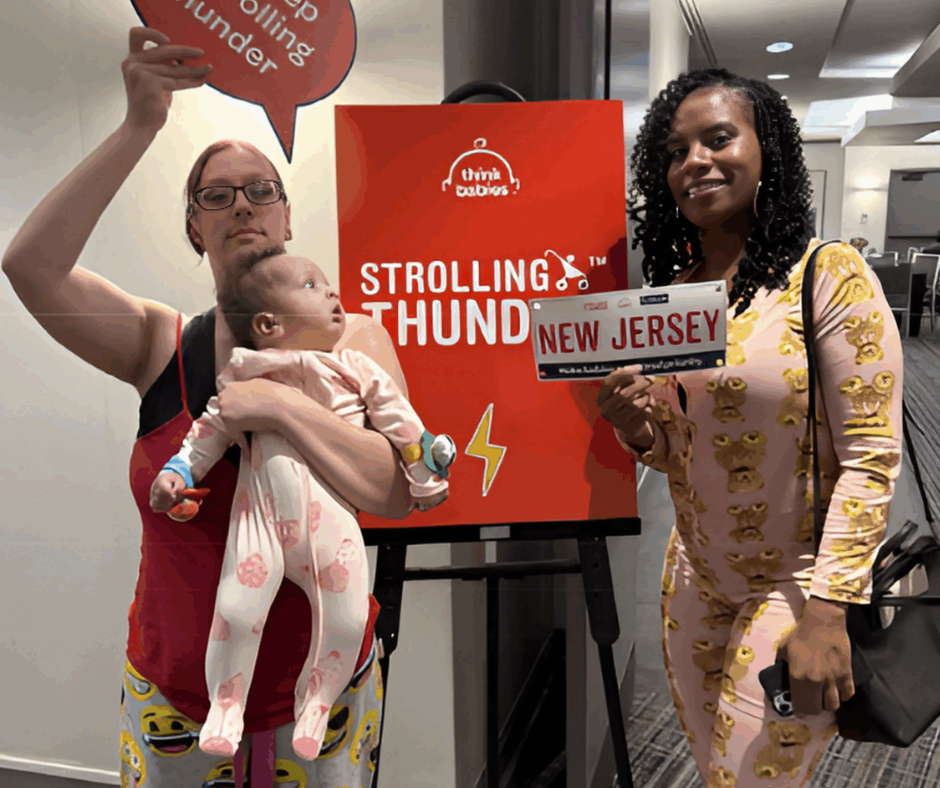
Christina, a first-time mom in Newark, felt overwhelmed caring for her newborn, Anna, who was born with a life-threatening complication. Mom’s life was sleepless nights, endless worry, confusing insurance forms.
Then she met Shadonae Stanley, a HealthySteps specialist at Newark Beth Israel Medical Center.
Shadonae helped Christina apply for Medicaid, WIC, and SNAP. She guided the new mom through bonding and infant care and checked in regularly to see how she was doing.
“She trusted me, and that made all the difference,” Shadonae says. “Now she’s a more confident mom and knows she’s not doing this alone.”
Christina agrees. “If I need help or just someone to talk to, I reach out. I’m grateful we met.”
That trust was a lifesaver. Anna is thriving. Christina feels empowered and supported as a mom. And last spring, she invited Shadonae to join her at ZERO TO THREE’s Strolling Thunder event in Washington, D.C. — where moms lobbied policymakers to prioritize good health, strong families, and positive early learning experiences. It was a powerful reminder that HealthySteps doesn’t just improve pediatric visits. It builds relationships that last.
At Newark Beth Israel’s Pediatric Health Center, HealthySteps is deepening trust with families and strengthening connections across the community — one relationship at a time.
“We are committed to providing our patients and families with the tools they need to build and sustain excellent health, and HealthySteps is an excellent partner. By embedding a child development specialist in our pediatric practice, they help us improve outcomes, reduce barriers, and build even stronger relationships with our patients, their families, and the communities we serve.”
— Darrell K. Terry, Sr., President and CEO, Newark Beth Israel Medical Center and Children’s Hospital of New Jersey